GRADE 11 & 12 COURSE SELECTION
HKA students are strongly encouraged to study what interests them and what aligns with their post-secondary ambitions. They have the flxibiity to choose IBDP Higher Level, IBDP Standard Level or High School level classes in each subject area and can opt to complete work experience placements to gain valuable practical experience in an area of possible future employment. The rigour of all HKA courses has been verified by the schools’ status as accredited by the Council of International Schools (CIS), Western Association of Schools and Colleges (WASC) and the International Baccalaureate Organisation (IBO).
To best understand what each course entails, we provide a number of opportunities for students and parents to learn about our pathways to graduation, course offerings and post-secondary requirements prior to finalising course selections. Throughout the journey, the teachers, administrators and counselors are available to answer questions and provide support so that every student feels empowered to make the best decisions for themselves today and in the future. See Grade 11 and 12 course choices below, our Admissions and Secondary School Principals will discuss choices with applicant families as part of the admissions process.
COURSE list and details
Group 1: Language & Literature
Language A: Language and Literature (SL/HL/HS)

This course examines diverse literary and non-literary texts across multiple media. Students learn to investigate the nature of language and analyse how it actively shapes and is influenced by identity and culture. The curriculum teaches them to evaluate communicative acts using wide-ranging academic approaches, including literary theory, sociolinguistics, media studies, and critical discourse analysis.
Language A: Literature self taught (SL)02. House Painting Essentials?
Focusing exclusively on literary works, this course teaches students to adopt diverse approaches to textual criticism. Students learn to explore the fundamental nature of literature, analyse the aesthetic functions of textuality and literary language, and evaluate the deep relationship between literature and the world, understanding how written texts engage with broader human experiences.
Group 2: Language Acquisition
Spanish ab initio / Mandarin ab initio (SL/HL/HS)
Offered at Standard Level for beginners, Language ab initio teaches students to communicate in both familiar and unfamiliar contexts. Students learn receptive, productive, and interactive skills across five prescribed themes. The course trains them to understand simple authentic texts, engage in conversations, express information using basic grammar, and use strategic communication to negotiate meaning.
Spanish B / Chinese B - Mandarin (SL/HL/HS)
Designed for students with previous experience, Language B develops communication skills through themes, texts, and conceptual understanding at both SL and HL. Students learn to narrate events, compare situations, and support opinions in various contexts. The HL level demands higher competency and uniquely requires the study of two literary works originally written in the target language.
Group 3: Individuals & Societies
History (SL/HL/HS)
DP history is an evidence-based, interpretive discipline within the individuals and societies framework. Students learn to become historical practitioners through diverse forms of inquiry, exploring global, regional, and national themes. The course teaches them to analyse varied perspectives, evaluate evidence to form independent judgements, and understand how history shapes identity, culture, politics, and society.
Psychology (SL/HL/HS)
Psychology is the scientific study of human and animal cognition and behaviour. Students learn to explore why individual, group, and cultural actions differ by observing patterns, forming hypotheses, and conducting empirical tests. By analysing genetic inheritance and social backgrounds, the course teaches students to describe, predict, and understand the deeper meaning behind human behaviour.
Economics (SL/HL/HS)
Economics explores how scarcity forces consumers, producers, and governments to make choices. Students learn microeconomics, macroeconomics, and the global economy using models and empirical data. By evaluating nine key concepts—including sustainability, equity, and government intervention—across six real-world issues, students analyse economic well-being and develop the skills to act responsibly as global citizens.
Group 4: Sciences
Biology (SL/HL/HS)
Biology is the pragmatic study of living organisms, from molecules to ecosystems. Students learn how life diversified through natural selection and explore four unifying themes: form and function, unity and diversity, continuity and change, and interaction. The course teaches students reductionist and systems approaches, experimental methods, and how biologists construct knowledge and its limitations.
Physics (SL/HL/HS)
Physics teaches students to understand the universe by exploring the nature of time, cosmology, and subatomic particles. Students learn to apply basic principles creatively, testing hypotheses to drive technological innovations in communication, medicine, and energy. The course fosters curiosity, training students to observe nature, analyse expanding scientific knowledge, and conduct empirical investigations.
Chemistry (SL/HL/HS)
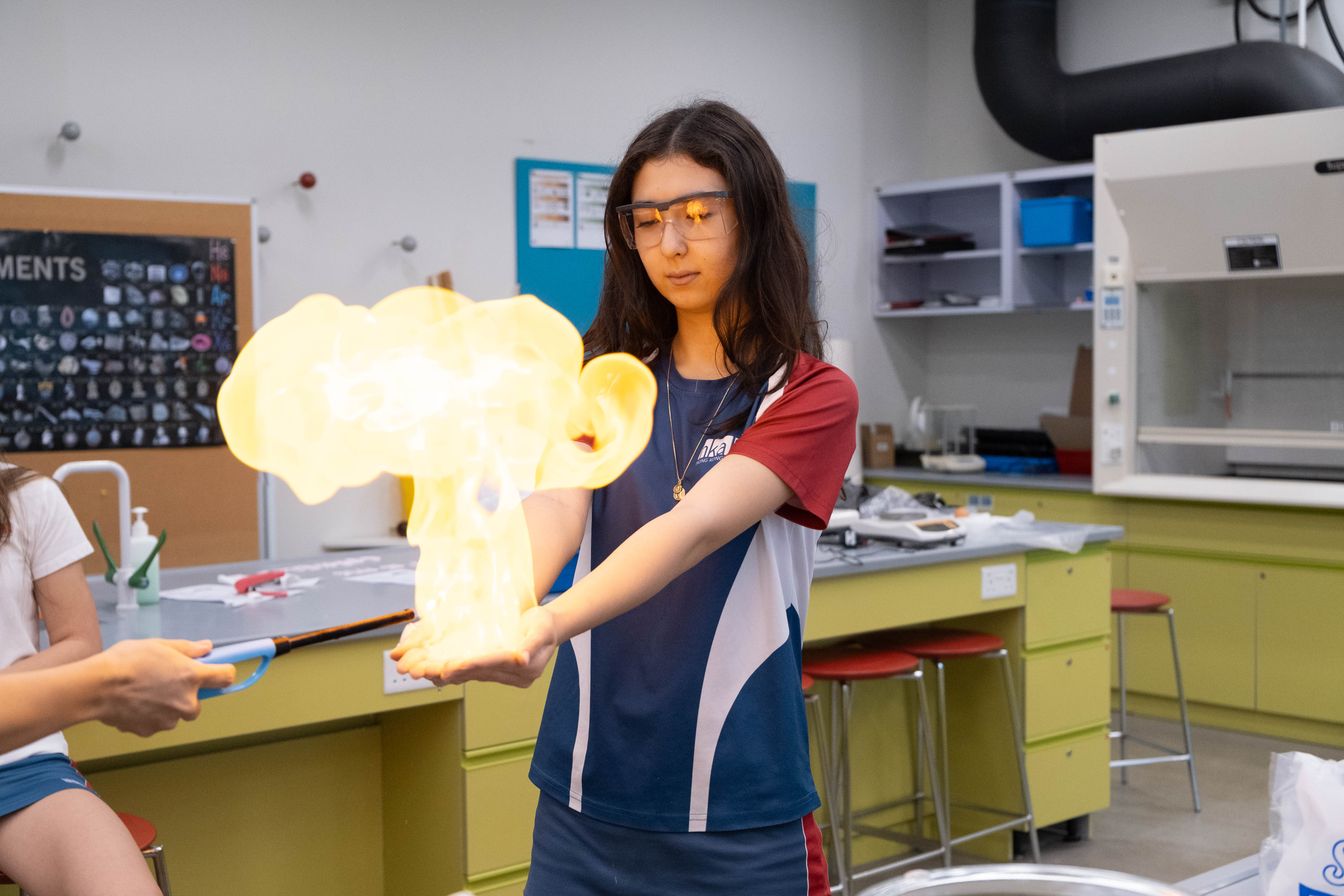
Chemistry explores patterns to explain microscopic matter and predict macroscopic behavior. Students learn to develop representative models, explanatory theories, and mathematical laws using creative, rational thinking. The course teaches empirical experimentation alongside modern technology like spectroscopy and molecular modelling, emphasising mathematical analysis, methodology errors, and equipment limitations when validating scientific claims.
Sports, Exercise and Health Science (SL/HL/HS)
SEHS explores how physiology, biomechanics, and psychology impact human health and athletic performance. Students learn to apply scientific principles to analyse human movement and sporting endeavors critically. Through practical experimental investigations in both laboratory and field settings, the course teaches students essential academic knowledge alongside hands-on investigative and data analysis skills.
Design Technology (SL/HL/HS)
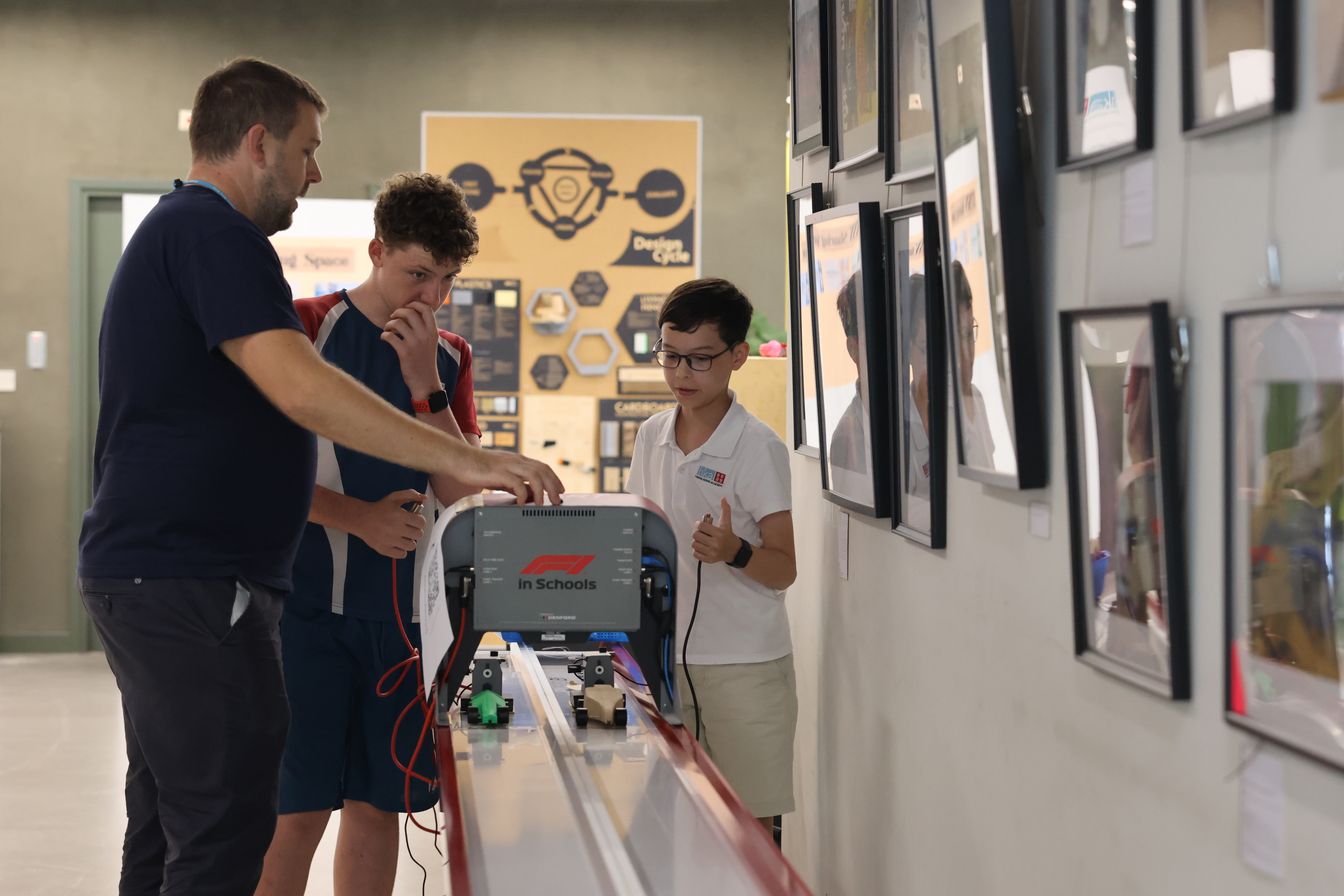
DP design technology focuses on inquiry and problem-solving through the design thinking process. Students learn to analyse problems, research requirements, and develop innovative solutions like prototypes or systems. The course teaches students to apply scientific material possibilities, balance creative thinking with client constraints, and collaborate within multidisciplinary teams to responsibly shape our technological world.
Environmental Systems and Societies (SL/HL/HS)
ESS is an interdisciplinary subject focusing on socio-environmental challenges. Students learn to analyse real-world issues through the lens of human societies and the natural world's spheres. The course teaches them to explore how these relationships change, consider potential adaptations and mitigations, and evaluate their impacts on the future.
Group 5: Mathematics
Analysis and Approaches (SL/HL/HS)
Mathematics provides a unique language to explore, understand, and describe the world. Students learn to construct, communicate, and justify rigorous mathematical arguments through investigation, conjecture, and proof. The course teaches pre-university topics (for example functions, calculus and trigonometry) while utilising technological software to analyse trends, quantify risk, and master analytical expertise.
Applications and Interpretation (SL/HS)
This course explores mathematics within a data-rich world, focusing on applications and mathematical modelling. Students learn to develop mathematical thinking by solving practical problems and utilizing extensive technology to justify conjectures. The curriculum teaches pre-university topics (for example calculus and statistics), enabling students to explore real-world contexts, analyze trends, and understand mathematical meaning.
Group 6: The Arts
Visual Arts (SL/HL/HS)
Visual Arts teach students to create, communicate, and connect as practicing artists. Through personal lines of inquiry, students learn to solve open-ended challenges, experiment with diverse art-making forms, and investigate past and contemporary artworks. The course also teaches them to curate exhibitions, engage with diverse perspectives, and develop critical thinking skills.
Music (SL/HL/HS)
Music teaches students to develop unique musical identities and expand their musicianship. Students learn listening, creative, and analytical skills by practically engaging as researchers, performers, and creators. The course trains them to explore varied musical contexts, experiment with emerging technologies, and realize musical works to communicate artistic intentions.
Theatre (SL/HL/HS)
DP theatre teaches students to make theatre as creators, designers, directors, and performers. Students learn to apply research and theory to physically inform their work, evaluating human conditions individually and within an ensemble. The course trains them to communicate responsibly to audiences and engage with diverse global theatre practices across time and cultures.